¿Cuáles son los riesgos de las redes sociales?
¿Cuáles son las amenazas a las que se exponen los usuarios? En este post quiero explicarte los 10 principales peligros de las redes sociales y cómo puedes evitarlo.
Tipos de peligros en las redes sociales y como solucionarlos
#1 Desconexión del mundo real
Peligro: Según un estudio de la empresa estadounidense Mediakix a lo largo de nuestra vida pasamos 5 años y 4 meses de media en las redes sociales. Si lo piensas, es una auténtica barbaridad. Abusar de las redes sociales puede llevarte a desconectar del mundo real.
Solución: Limita el tiempo que pasas enganchado a Facebook o Twitter. Evita revisar tus redes sociales cada dos por tres cuando estés con amigos o familiares. Si tienes problemas para hacerlo, busca ayuda psicológica. Los trastornos de adicción a las redes sociales son cada vez más frecuentes pero por suerte son tratables.
#2 Uso indebido de tus fotos
Peligro: En cuanto publicas una imagen en las redes sociales, ésta escapa a tu control. Eso quiere decir que, si no tienes cuidado, cualquiera puede verlas y usarlas Por si fuera poco, a veces los derechos de la imagen pasa a ser propiedad de la plataforma.
Solución: Infórmate sobre las políticas de los sitios a los que subas tus fotos (qué derechos tienen sobre tus imágenes), revisa tus opciones de privacidad para ver quién puede tener acceso a ellas y evita subir imágenes demasiado personales o comprometidas.
#3 Suplantación de identidad
Peligro: Cualquiera puede coger tu foto de perfil de Facebook, tu nombre y hacerse pasar por ti sin tu consentimiento. Los fines son variados, pero casi siempre maliciosos. Ha habido casos dramáticos de pederastas que se hacían pasar por niños para contactar con otros niños.
Solución: La suplantación de identidad es un delito. Denuncia a la cuenta que te esté suplantando y no solo ante la plataforma, sino también ante las autoridades de tu país.
#4 Ciberbulling
El acoso en las redes sociales es una de las lacras de Internet. Los acosadores aprovechan la sensación de la impunidad que ofrece Internet para hacerles la vida imposible a sus víctimas. Es un problema que afecta a gente de todas las edades, no solo a los más pequeños (no hay más que ver las campañas de linchamiento digital que ocurren periódicamente en Twitter).
Solución: Dependiendo del nivel del acoso lo mejor es denunciar y mantenerse unos días alejado de las redes sociales hasta que pase la tormenta.
#5 Problemas para encontrar trabajo
Peligro: No es muy ético, pero no son pocos los departamentos de RR.HH que bucean en las redes sociales para buscar más información sobre los candidatos a un puesto de trabajo. Es un filtro previo del que se habla poco pero existe. Así que si eres de los que sube fotos personales a su Facebook puedes descubrir que esa foto, borracho en la última cena de Navidad, no te beneficia mucho.
Solución: Cuida tu imagen pública en las redes sociales y revisa las opciones de privacidad de sitios como Facebook para que solo tus amigos puedan ver tus publicaciones e imágenes.
#6 Pérdida de productividad
Peligro: Ver que estar pasando en Twitter, cotillear las publicaciones de amigos en Facebook… y todo eso en horas de trabajo. No es de extrañar que algunas empresas opten por capar el acceso a según qué páginas.
Solución: Reserva las redes sociales para tu tiempo libre.
#7 Malware
Peligro: Las redes sociales son uno de los focos más vulnerables para infectar tu ordenador, con cientos de virus camuflados como anuncios o publicaciones. Los más inofensivos simplemente llenarán tu bandeja de mensajes de spam, pero otros pueden recolectar tus datos más privados.
Solución: Desconfía de las invitaciones a juegos y de anuncios que te inviten a hacer clic o tengan una redacción sospechosa
#8 Desprotección de menores
Peligro: Aunque casi todas las redes piden una edad mínima de entrada, no es ningún secreto que los críos se la saltan a la torera. Ellos son el colectivo más vulnerable en internet, así que es necesario que los padres estén especialmente atentos.
Solución: Controla el uso de las redes sociales que hacen tus hijos.
#9 Problemas legales
Peligro: La gente no sabe que todo lo que dice en las redes sociales puede tener repercusiones legales. Facebook o Twitter son extensiones del mundo real, así que lo que es delito fuera también lo es allí.
Solución: Ten mucho cuidado con insultar, difamar o difundir rumores.
#10 Fake news
Peligro: Las fake news se han puesto muy de moda en los últimos meses. Son noticias falsas que se difunden como la pólvora a través de las redes sociales. Su fin es intoxicar y manipular a la opinión pública.
Solución: No te creas todo lo que ves en las redes sociales y comprueba cualquier noticia antes de difundirla.
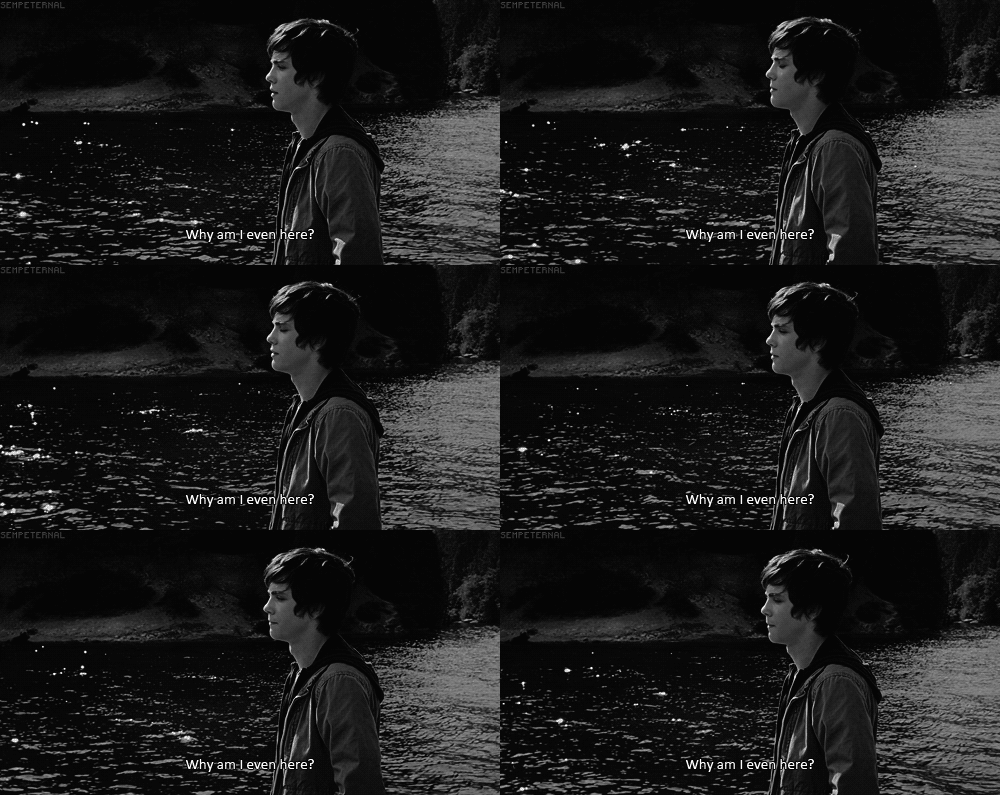
#11 Personas antisociales
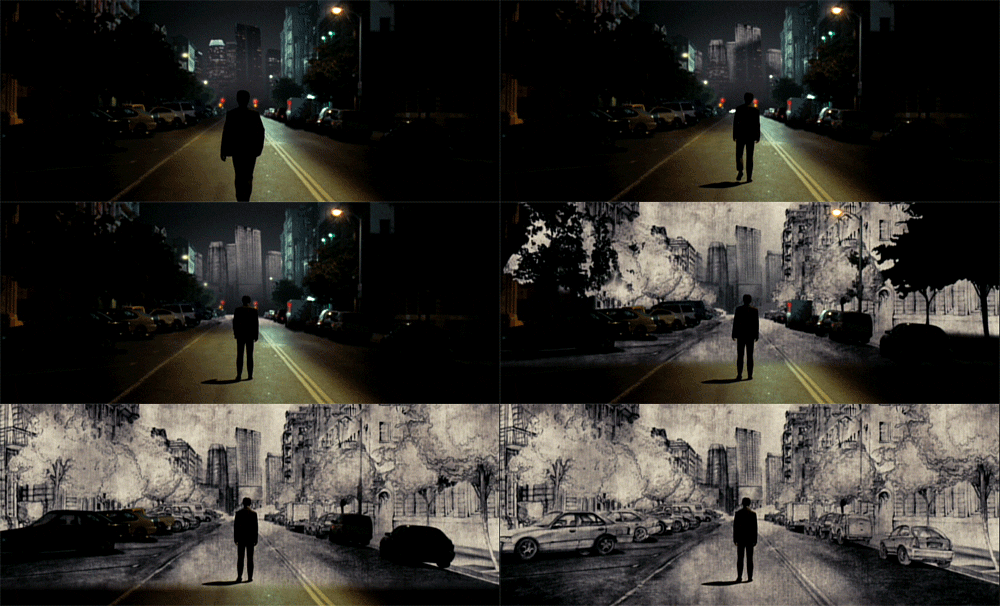


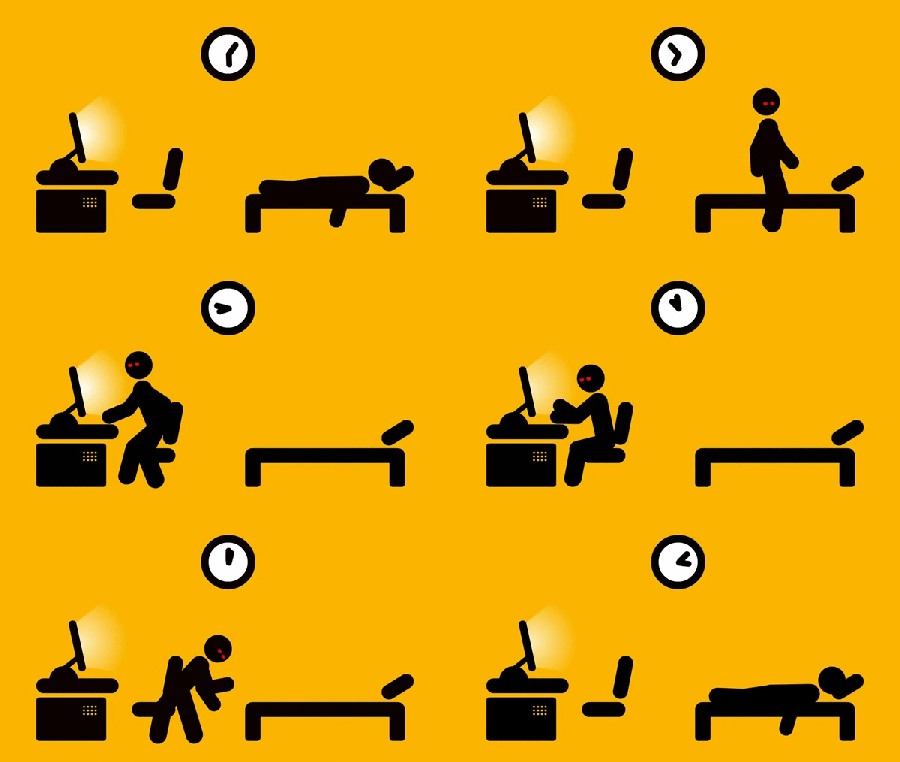
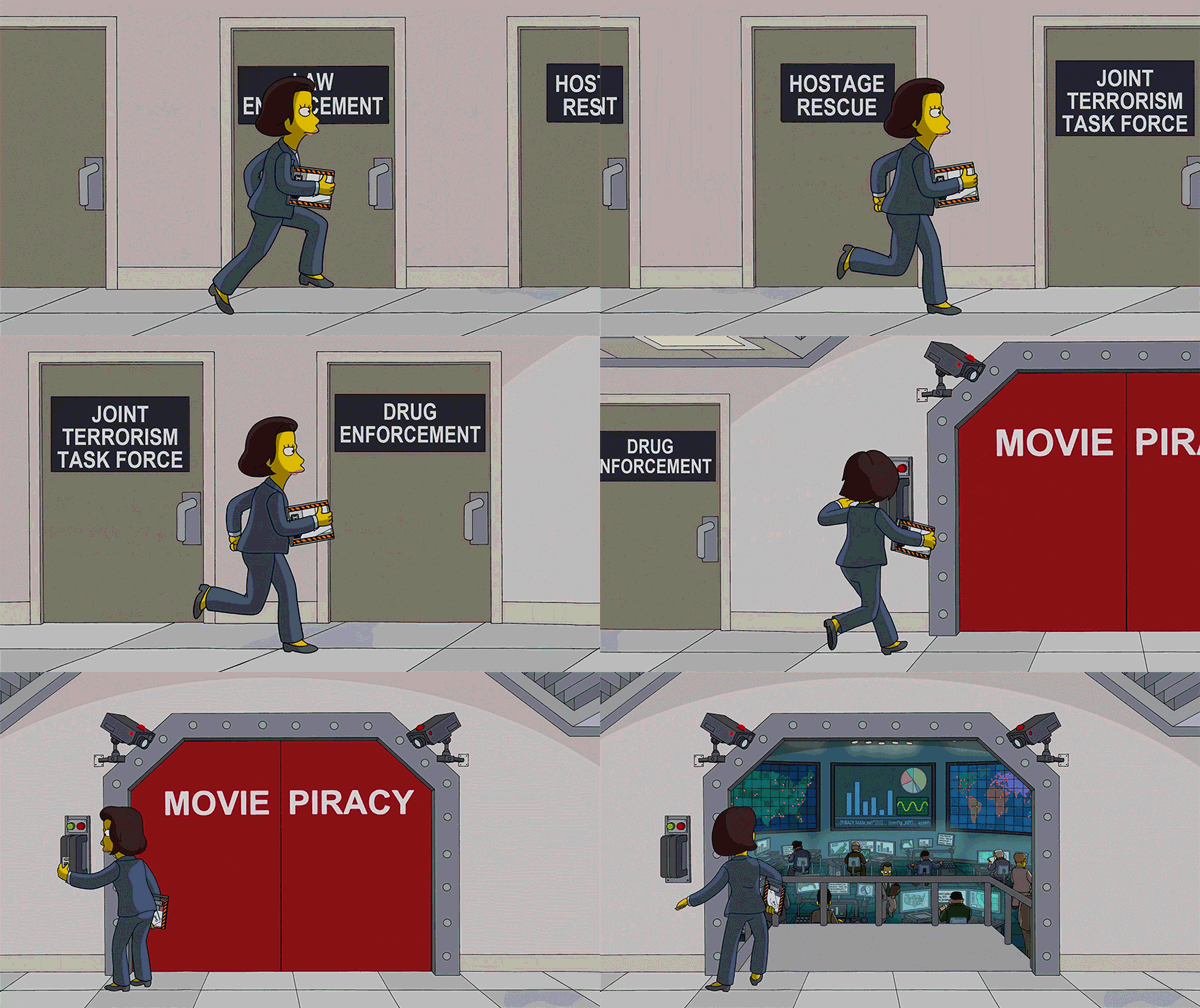
#11 Personas antisociales
Facebook, Twitter o Instagram pueden resultar entretenidas si estas complementan tu vida o si haces un uso responsable y coherente de ellas. Los excesos siempre son malos, estar pendiente de la información o lanzar mensajes a tus amigos virtuales puede hacer que desatiendas tu vida "de verdad". No descuides el trabajo o los estudios por personas que no conoces, esto supone un problema y terminarás aislado, olvidándote de vivir con tus amigos/familia/pareja fuera del confort del mundo virtual. ¡No lo hagas!
#12 Sin soledad
Estamos acostumbrados a rodearnos de gente aunque en realidad la soledad nunca es un enemigo. Las personas con problemas serios con las redes sociales suelen plasmar todo lo que piensan y hay que saber que la soledad a veces no es una mala compañía. De hecho estar a solas con tus pensamientos pueden venirte bien para recapacitar sobre tu futuro (en el terreno laboral, social, amoroso, familiar...) en lugar de intentar rellenar esos "momentos vacios" con incursión obligada en las redes sociales.
#13 Sin intimidad
Una práctica habitual en las redes sociales es poner absolutamente todo lo que haces, lo que piensas o los planes que tienes y con quién los realizas. Quizás no es necesario criticar a la sociedad de esa manera, poner tus fotos más interesantes del último viaje o sacar tus pensamientos más internos, estás lanzando a un puñado de desconocidos tus verdaderos sentimientos y por tanto privándote de la intimidad que te mereces. Guarda algo para ti mismo y valora esa intimidad que a veces es necesaria para seguir adelante.
#14 Engaños
En Internet se encuentra de todo: amigos, colegas para salir, compañeros, pareja... pero también lo contrario: odios, mentiras, chantajes y frustraciones. La vida online está muy ligada también al acoso, o en este caso al 'ciberacoso'. Los jóvenes son más vulnerables o tal vez más inocentes, se creen cualquier cosa y no tienen un bagaje en el manejo de las redes sociales para decir 'basta' o parar a tiempo. Para librarnos de esos acosadores es tan sencillo como borrar un perfil o comunicárselo a alguien competente.
#15 Adicción
Uno de los problemas más evidentes que entraña el uso de las redes sociales es la adicción que suponen. Según realizó un estudio de la Universidad de Harvard (2012), la exposición a ellas activa las mismas zonas del cerebro que el consumo de drogas. No es de extrañar que a veces quedemos con alguien y estemos más pendientes del móvil y oigamos decir que alguien tiene que colgar una foto en Instagram y Facebook ya que es su forma 'sana' de sentirse bien. Como cualquier adicción hay que saber desengancharse a tiempo.
#16 Robo de imágenes
¿Quién no hay ha publicado alguna vez una imagen a una red social? Todos hemos sucumbido a la tentación de dar a conocer a nuestros amigos ese último viaje, esa comida sabrosa o esa fiesta tan importante, pero cuidado con el tipo de fotografías que subes a la nube. Hacerse fotografías en ropa interior, bañador o bikini o muy sexys es un peligro ya que hay gente enferma que se dedica a robarlas para su uso propio, para otras páginas web de adultos o incluso para realizar abusos y chantajes.
#17 Accidentes
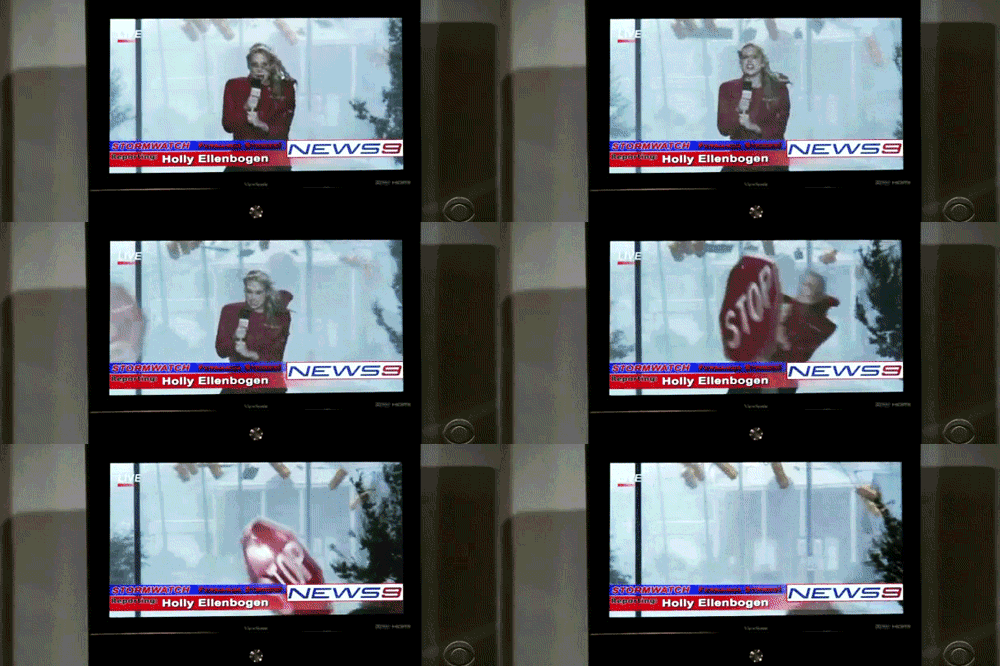
No es lo más común pero seguro que te habrás dado cuenta de que el uso constante de las redes sociales en los dispositivos móviles ha elevado el número de accidentes. No solo es que las personas sigan usando el móvil mientras están al volante (no escarmientan), sino también por la calle. Conozco a gente que por actualizar su estado de Facebook, colgar la última foto en Instagram o poner una opinión en Twitter ha tropezado con un bordillo, ha caído al suelo, se ha estampado con una señal, se ha chocado con una farola o se ha caído en una alcantarilla.
#18 Depresión
El uso excesivo y desmesurado de las redes sociales puede llevarte a una depresión (en casos extremos). A veces, entrar en Facebook para comprobar lo que te estás perdiendo no ayuda, como tampoco lo hace esperar impaciente los comentarios o 'Me Gusta' de tus amigos y conocidos. Es mejor preocuparse por lo que te rodea que de esos "falsos" momentos de alegría que únicamente pueden beneficiarte en un instante puntual y generalmente ni eso.
#19 Mentiras
Mentir en las redes sociales es el común denominador de casi el 70% de los usuarios. No es necesario contar mentiras abiertamente, es habitual embellecer la realidad para hacer que tu vida parezca más interesante de cara a los demás. Sus propias mentiras son capaces de llegar a generar otros sentimientos como la rivalidad y la envidia provocada por otros usuarios y por no encajar en esa versión ficticia inventada sobre ti mismo o tus circunstancias.
english:
What are the risks of social media?
What are the threats users are exposed to? In
this post I want to explain the top 10 dangers of
social media and how you can avoid it.
Types of social media hazards and how to fix them
#1 Real-world disconnection
Danger: According to a study by the American company Mediakix throughout our lives we spent 5 years and 4 months on average on social media. If you think about it, it's a real barbarity. Abusing social media can lead you to disconnect from the real world.
Solution: Limit the time you spend hooked on Facebook or Twitter. Avoid checking your social networks every two by three when you're with friends or family. If you're having trouble doing so, seek psychological help. Social media addiction disorders are becoming more common but luckily treatable.
#2 Misuse of Your Photos
Danger: As soon as you post an image on social media, it escapes your control. That means that if you're not careful, anyone can see them and use them on top of that, sometimes the rights to the image become the property of the platform.
Solution: Learn about the policies of the sites you upload your photos to (what rights they have over your images), review your privacy options to see who can access them, and avoid uploading overly personal or compromised images.
#3 Impersonation
Danger: Anyone can take your Facebook profile picture, your name and impersonate you without your consent. The purposes are varied, but almost always malicious. There have been dramatic cases of paedophiles posing as children to contact other children.
Solution: Impersonation is a crime. Report to the account that is impersonating you and not only to the platform, but also to the authorities of your country.
#4 Cyberbulling
Harassment on social media is one of the scourges of the Internet. Stalkers take advantage of the sense of impunity offered by the Internet to make life impossible for their victims. It's a problem that affects people of all ages, not just the little ones (just watch the digital lynching campaigns that happen periodically on Twitter).
Solution: Depending on the level of harassment it is best to report and stay away from social media for a few days until the storm passes.
#5 Trouble finding work
Danger: It is not very ethical, but there are few HR departments. HH who dive on social media to find out more about job candidates. It's a little talk ahead of the filter, but it exists. So if you're one of those who uploads personal photos to your Facebook you can find out that that photo, drunk at the last Christmas dinner, doesn't benefit you much.
Solution: Take care of your public image on social networks and review the privacy options of sites like Facebook so that only your friends can see your posts and images.
#6 Loss of productivity
Danger: See what's happening on Twitter, gossip inglet friends' posts on Facebook... and all that in working hours. Unsurprisingly, some companies choose to encode access to which pages.
Solution: Reserve social networks for your free time.
#7 Malware
Danger: Social media is one of the most vulnerable hotspots to infect your computer, with hundreds of viruses camouflaged as ads or posts. The harmless ones will simply fill your spam message tray, but others can collect your most private data.
Solution: Be wary of invitations to games and ads that invite you to click or have suspicious wording
#8 Child Check-up
Danger: Although almost all networks ask for a minimum age of entry, it is no secret that children skip it into the bullfactory. They are the most vulnerable online group, so parents need to be especially attentive.
Solution: Control the use of social networks that your children make.
#9 Legal problems
Danger: People don't know that everything they say on social media can have legal repercussions. Facebook or Twitter are real-world extensions, so what's crime outside is also there.
Solution: Be very careful about insulting, defamed or spreading rumors.
#10 Fake news
Danger: Fake news has become very fashionable in recent months. It's fake news that spreads like gunpowder through social media. Its purpose is to poison and manipulate public opinion.
Solution: Don't create everything you see on social media and check any news before spreading it
#11 Antisocial people
Facebook, Twitter or Instagram can be entertaining if they complement your life or if you make responsible and consistent use of them. Excesses are always bad, keeping an eye on information or throwing messages to your virtual friends can make you take your life apart "really". Don't neglect work or studies by people you don't know, this is a problem and you'll end up isolated, forgetting to live with your friends/family/partner outside the comfort of the virtual world. Don't do it!
#12 Without loneliness
We're used to surrounding ourselves with people, even though in reality loneliness is never an enemy. People with serious social media problems often capture everything they think and you have to know that loneliness is sometimes not bad company. In fact, being alone with your thoughts can be good for you to think about your future (in the workplace, social, loving, family...) instead of trying to fill in those "empty moments" with forced incursion into social media.
#13 No intimacy
A common practice on social media is to put absolutely everything you do, what you think or the plans you have and with whom you make them. Maybe it's not necessary to criticize society that way, put your most interesting photos from the last trip or take your inner thoughts, you're throwing your real feelings at a bunch of strangers and therefore depriving you of the intimacy you deserve . Save something for yourself and value that intimacy that is sometimes necessary to move forward.
#14 Deceit
On the Internet you will find everything: friends, colleagues to go out, colleagues, couple... but also the opposite: hatred, lies, blackmail and frustrations. Online life is also closely linked to harassment, or in this case to 'cyberbullying'. Young people are more vulnerable or perhaps more innocent, they believe anything and they don't have a background in the handling of social media to say 'enough' or stop in time. Getting rid of these stalkers is as simple as deleting a profile or communicating it to someone competent.
#15 Addiction
One of the most obvious problems involved in using social media is the addiction they pose. According to a Harvard University study (2012), exposure to them activates the same areas of the brain as drug use. No wonder sometimes we meet someone and be more mobile-pending and we hear that someone has to post a photo on Instagram and Facebook as it's their 'healthy' way of feeling good. Like any addiction you have to know how to unhook in time.
#16 Image theft
Who hasn't ever posted an image to a social network? We've all succumbed to the temptation to make our friends aware of that last trip, that tasty meal or that important party, but beware of the kind of photographs you upload to the cloud. Taking pictures in underwear, swimsuit or bikini or very sexy is a danger as there are sick people who steal them for their own use, for other adult websites or even to carry out abuse and blackmail
. #17 Accidents
It is not the most common but surely you will have noticed that the constant use of social networks on mobile devices has increased the number of accidents. It's not just that people keep using their mobile while they're behind the wheel (don't dig), but also down the street. I know people who by updating their Facebook status, uploading the last photo on Instagram or putting an opinion on Twitter has stumbled on a curb, fallen to the ground, stamped with a signal, crashed into a lamppost or fallen into a sewer.
#18 Depression
Excessive and excessive use of social media can lead to depression (in extreme cases). Sometimes, logging into Facebook to see what you're missing doesn't help, as it doesn't make you look forward to the comments or 'Likes' of your friends and acquaintances. It's better to worry about what's around you than those "fake" moments of joy that can only benefit you in a timely moment and usually not even that.
#19 Lies
Lying on social media is the common denominator of almost 70% of users. You don't need to tell lies openly, it's common to beautify reality to make your life seem more interesting in the face of others. Their own lies are able to generate other feelings such as rivalry and envy caused by other users and for not fitting into that fictional version invented about yourself or your circumstances.
english:
What are the risks of social media?
What are the threats users are exposed to? In
this post I want to explain the top 10 dangers of
social media and how you can avoid it.
Types of social media hazards and how to fix them
#1 Real-world disconnection
Danger: According to a study by the American company Mediakix throughout our lives we spent 5 years and 4 months on average on social media. If you think about it, it's a real barbarity. Abusing social media can lead you to disconnect from the real world.
Solution: Limit the time you spend hooked on Facebook or Twitter. Avoid checking your social networks every two by three when you're with friends or family. If you're having trouble doing so, seek psychological help. Social media addiction disorders are becoming more common but luckily treatable.
#2 Misuse of Your Photos
Danger: As soon as you post an image on social media, it escapes your control. That means that if you're not careful, anyone can see them and use them on top of that, sometimes the rights to the image become the property of the platform.
Solution: Learn about the policies of the sites you upload your photos to (what rights they have over your images), review your privacy options to see who can access them, and avoid uploading overly personal or compromised images.
#3 Impersonation
Danger: Anyone can take your Facebook profile picture, your name and impersonate you without your consent. The purposes are varied, but almost always malicious. There have been dramatic cases of paedophiles posing as children to contact other children.
Solution: Impersonation is a crime. Report to the account that is impersonating you and not only to the platform, but also to the authorities of your country.
#4 Cyberbulling
Harassment on social media is one of the scourges of the Internet. Stalkers take advantage of the sense of impunity offered by the Internet to make life impossible for their victims. It's a problem that affects people of all ages, not just the little ones (just watch the digital lynching campaigns that happen periodically on Twitter).
Solution: Depending on the level of harassment it is best to report and stay away from social media for a few days until the storm passes.
#5 Trouble finding work
Danger: It is not very ethical, but there are few HR departments. HH who dive on social media to find out more about job candidates. It's a little talk ahead of the filter, but it exists. So if you're one of those who uploads personal photos to your Facebook you can find out that that photo, drunk at the last Christmas dinner, doesn't benefit you much.
Solution: Take care of your public image on social networks and review the privacy options of sites like Facebook so that only your friends can see your posts and images.
#6 Loss of productivity
Danger: See what's happening on Twitter, gossip inglet friends' posts on Facebook... and all that in working hours. Unsurprisingly, some companies choose to encode access to which pages.
Solution: Reserve social networks for your free time.
#7 Malware
Danger: Social media is one of the most vulnerable hotspots to infect your computer, with hundreds of viruses camouflaged as ads or posts. The harmless ones will simply fill your spam message tray, but others can collect your most private data.
Solution: Be wary of invitations to games and ads that invite you to click or have suspicious wording
#8 Child Check-up
Danger: Although almost all networks ask for a minimum age of entry, it is no secret that children skip it into the bullfactory. They are the most vulnerable online group, so parents need to be especially attentive.
Solution: Control the use of social networks that your children make.
#9 Legal problems
Danger: People don't know that everything they say on social media can have legal repercussions. Facebook or Twitter are real-world extensions, so what's crime outside is also there.
Solution: Be very careful about insulting, defamed or spreading rumors.
#10 Fake news
Danger: Fake news has become very fashionable in recent months. It's fake news that spreads like gunpowder through social media. Its purpose is to poison and manipulate public opinion.
Solution: Don't create everything you see on social media and check any news before spreading it
#11 Antisocial people
Facebook, Twitter or Instagram can be entertaining if they complement your life or if you make responsible and consistent use of them. Excesses are always bad, keeping an eye on information or throwing messages to your virtual friends can make you take your life apart "really". Don't neglect work or studies by people you don't know, this is a problem and you'll end up isolated, forgetting to live with your friends/family/partner outside the comfort of the virtual world. Don't do it!
#12 Without loneliness
We're used to surrounding ourselves with people, even though in reality loneliness is never an enemy. People with serious social media problems often capture everything they think and you have to know that loneliness is sometimes not bad company. In fact, being alone with your thoughts can be good for you to think about your future (in the workplace, social, loving, family...) instead of trying to fill in those "empty moments" with forced incursion into social media.
#13 No intimacy
A common practice on social media is to put absolutely everything you do, what you think or the plans you have and with whom you make them. Maybe it's not necessary to criticize society that way, put your most interesting photos from the last trip or take your inner thoughts, you're throwing your real feelings at a bunch of strangers and therefore depriving you of the intimacy you deserve . Save something for yourself and value that intimacy that is sometimes necessary to move forward.
#14 Deceit
On the Internet you will find everything: friends, colleagues to go out, colleagues, couple... but also the opposite: hatred, lies, blackmail and frustrations. Online life is also closely linked to harassment, or in this case to 'cyberbullying'. Young people are more vulnerable or perhaps more innocent, they believe anything and they don't have a background in the handling of social media to say 'enough' or stop in time. Getting rid of these stalkers is as simple as deleting a profile or communicating it to someone competent.
#15 Addiction
One of the most obvious problems involved in using social media is the addiction they pose. According to a Harvard University study (2012), exposure to them activates the same areas of the brain as drug use. No wonder sometimes we meet someone and be more mobile-pending and we hear that someone has to post a photo on Instagram and Facebook as it's their 'healthy' way of feeling good. Like any addiction you have to know how to unhook in time.
#16 Image theft
Who hasn't ever posted an image to a social network? We've all succumbed to the temptation to make our friends aware of that last trip, that tasty meal or that important party, but beware of the kind of photographs you upload to the cloud. Taking pictures in underwear, swimsuit or bikini or very sexy is a danger as there are sick people who steal them for their own use, for other adult websites or even to carry out abuse and blackmail
. #17 Accidents
It is not the most common but surely you will have noticed that the constant use of social networks on mobile devices has increased the number of accidents. It's not just that people keep using their mobile while they're behind the wheel (don't dig), but also down the street. I know people who by updating their Facebook status, uploading the last photo on Instagram or putting an opinion on Twitter has stumbled on a curb, fallen to the ground, stamped with a signal, crashed into a lamppost or fallen into a sewer.
#18 Depression
Excessive and excessive use of social media can lead to depression (in extreme cases). Sometimes, logging into Facebook to see what you're missing doesn't help, as it doesn't make you look forward to the comments or 'Likes' of your friends and acquaintances. It's better to worry about what's around you than those "fake" moments of joy that can only benefit you in a timely moment and usually not even that.
#19 Lies
Lying on social media is the common denominator of almost 70% of users. You don't need to tell lies openly, it's common to beautify reality to make your life seem more interesting in the face of others. Their own lies are able to generate other feelings such as rivalry and envy caused by other users and for not fitting into that fictional version invented about yourself or your circumstances.


No hay comentarios:
Publicar un comentario